
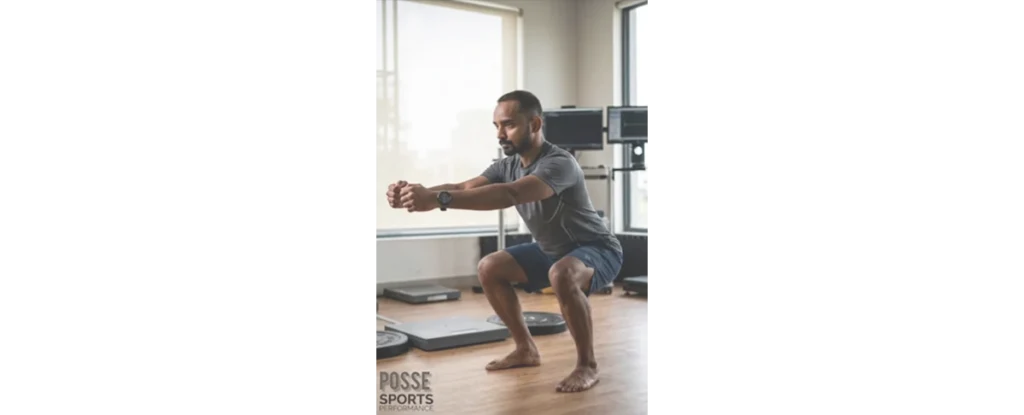
Ligament Instability: When the Joint Loses Control Under Load
Ligament instability is often described as a structural problem a torn ligament, a weakened joint, or the need for surgical repair. In high-performance individuals, however, instability is rarely that simple. It is not just a ligament issue. It is a control failure under load.
For athletes and active individuals, the experience is familiar: the knee giving way, hesitation during movement, loss of trust, and reduced confidence despite normal reports. These are signs that the joint has lost its ability to coordinate load, movement, and control simultaneously.
Beyond Ligaments: Understanding Joint Stability
Ligaments provide passive stability, but true stability is a coordinated system involving muscular control, neuromuscular timing, joint alignment, and load distribution. When this system fails, instability appears even if the ligament is intact.
Types of Instability in High-Performance Knees
Post-ACL instability, micro-instability, rotational instability, functional instability, and load-bearing instability represent different ways instability manifests under real conditions.
The Joint Integrity Equation
Joint Integrity = Load Capacity + Stability Control + Mobility Balance. When one component fails, the system becomes vulnerable. Injury is caused not just by weakness, but by imbalance.
Why Instability Persists After Recovery
Many individuals complete rehab but still experience hesitation, reduced speed, and lack of confidence. This happens because recovery often stops at structure, not performance.
The Missing Layer: Human Performance
True recovery requires restoring strength, power, speed, endurance, and reaction timing. Without these, movement becomes cautious and delayed.
The Final Layer: Movement Precision
In sports, stability alone is insufficient. The joint must demonstrate accuracy, timing, and agility. Even small errors in timing or alignment can lead to incorrect load and injury.
LCMSC–Sharma Protocol: A System Perspective
Within the LCMSC–Sharma Protocol, ligament instability is evaluated across three layers: structural integrity, performance capacity, and precision control. According to Pawan Sharma, instability reflects a failure in how the body manages and expresses movement under load.
Confidence: The Invisible Loss
Loss of confidence is a major consequence of instability. Without restoring neuro-mechanical trust, performance remains limited.
Redefining Recovery
Recovery is not defined by absence of pain but by the ability to tolerate load, control movement, and express speed and precision without hesitation.
Author
Pawan Sharma – Biomechanical Restoration & Human Performance Specialist
Pawan Sharma integrates structural integrity, load management, and movement precision to restore both joint stability and human performance.